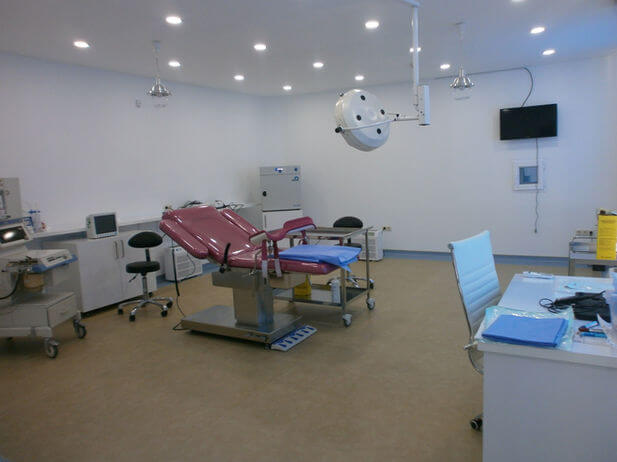
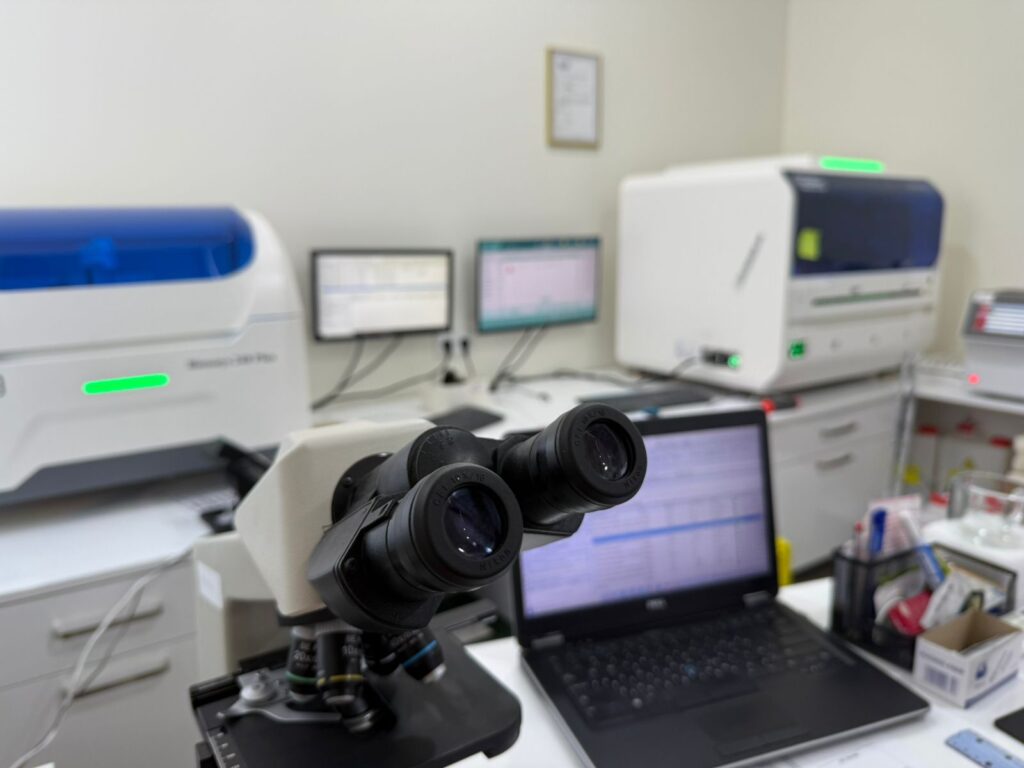
Fertility diagnosis at GI Rimon starts with comprehensive testing designed to identify the possible causes of the reproductive problem. We assess both partners at the same time, in order to get a complete medical picture and move on to treatment planning without waiting for one side’s workup to finish.
Fertility testing for women includes blood tests to assess the levels of the fertility hormones, including progesterone and estrogen, as well as tests of ovarian function and the structure of the reproductive system. For men, a semen analysis is the basic test for male fertility problems and is performed in our laboratory.
After the results are in, we hold a summary meeting at which we explain the findings and build a personal fertility treatment plan.
Fertility tests for women: hormones, eggs and uterus
Fertility testing for women at GI Rimon includes blood tests to assess the level of the fertility hormones, including progesterone and estrogen. The hormonal profile may include FSH, LH and AMH to assess the ovarian reserve — the number of eggs remaining in the ovaries — as well as baseline hormone levels. We perform the tests on specific days of the menstrual cycle to obtain results that are as accurate as possible.
An ultrasound scan is used to assess the structure of the uterus and ovaries, to count the follicles and to measure the thickness of the endometrium. When needed we also check the patency of the fallopian tubes (HSG) and perform a diagnostic hysteroscopy to examine the uterine cavity.
For a woman over 35 we sometimes recommend additional tests to assess the ovarian reserve and egg quality as a basis for individually adapted fertility treatment. After the results are in, a medical consultation is held to plan the next steps.
Fertility tests for men: semen analysis and hormones
The diagnosis in men starts with a semen analysis, the basic test for male fertility problems. The test is performed in our laboratory and examines the quality of the sperm, the number of cells and their motility.
In suitable cases we also perform blood tests to assess male hormones, including testosterone and FSH, to check the function of the gonads. Genetic tests can be recommended when medically needed. In cases where no sperm cells are found in the ejaculate, we perform a testicular biopsy to find sperm cells for IVF.
Our medical team explains the results and presents the options for further workup or treatment. The recommendations are adapted to the findings and the medical picture of both partners.