
Tbel-Abuseridze St, 5a, Batumi 6004
M-F 10-17 | Sat 10-14 | Sun: OFF
Article 143, since 1997Verified September 2026Legal support included

Surrogacy Law in Georgia: Legal Requirements for Intended Parents in 2026

Surrogacy in Georgia (the country in the South Caucasus, not the US state) is legal for foreign intended parents. It is regulated by Article 143 of the Law of Georgia on Health Care, in force since 1997, together with egg and sperm donation and in vitro fertilization. In 2023 the government announced an intention to limit surrogacy to Georgian citizens, but the bill never reached parliament: as of September 2026 no ban has been adopted, and surrogacy for international patients continues under the same law.

1997Law in force since
1 dayBirth registration
0Court hearings needed
€62,000Armenia program, from
Surrogacy law in Georgia

LegalSURROGACY IN GEORGIA
Licensed clinicRegulated by the Georgian Ministry of Health
ESHRE protocolsEuropean standards in every programme
Our own laboratoryEmbryology supervised by Dr. Pavel Itsikson
English and HebrewOne contact person from first call to result

At GI Rimon clinic in Batumi we have been helping foreign couples with surrogacy for more than five years, and every journey starts with a legal check: whether you are eligible under Georgian law, which documents you need, and how the birth of the child will be registered. On this page we explain the legal requirements the way we explain them at the first consultation. The medical side is described on the surrogacy in Georgia page, and the prices — €50,000 to €65,000 — on the surrogacy cost page.

In brief

The essentials in one glance

Surrogacy is legal in Georgia under Article 143 of the Law on Health Care (1997); the ban discussed in 2023 was never adopted — verified September 2026
Eligible: heterosexual couples married or cohabiting for at least one year, with a medical indication
The birth certificate lists only the intended parents; registration in one day, no court
Written contract between the parents, the surrogate and the clinic; legal support is part of the program
Singles and same-sex couples: our branch in Armenia.
The law

Is surrogacy legal in Georgia? What the law says

Yes. Article 143 of the Law on Health Care allows surrogacy and the donation of reproductive cells, and it defines who the legal parents of the child are: the couple for whom the pregnancy is carried. Both altruistic and commercial surrogacy are permitted, so a woman who decides to become a surrogate may receive compensation under the contract. Gestational surrogacy — where the embryo is created by IVF from the intended parents’ or donors’ cells and the surrogate has no genetic link to the child — is the form practiced at our clinic.

The law is short and has been stable for almost three decades, which is one of the reasons Georgia became a destination for international surrogacy. The ban discussed in 2023 did not become law; if that changes, couples already under contract are the first thing we would consider and clarify, and we state the date of verification on this page for that reason.

Who it suits

Who is eligible: legal requirements for intended parents

Georgian law sets three conditions for intended parents, and we check all three before signing a contract:

A heterosexual couple

Surrogacy is available to a man and a woman who are legally married or have lived together as a couple. The law does not allow surrogacy for single men, single women or same-sex couples.

At least one year of marriage or cohabitation

A couple in a civil (unregistered) relationship must confirm that they have lived together for at least one year; a registered marriage is confirmed by the marriage certificate.

A medical indication

Surrogacy is a medical treatment, not a lifestyle choice under Georgian law: the woman must be unable to bear a child herself — for example, because of the absence of the uterus, repeated IVF failures, recurrent pregnancy loss or a condition in which pregnancy is dangerous for her health. Our fertility doctor confirms the indication after reviewing your medical records.

Intended parents who do not meet these conditions — single parents, same-sex couples or couples married for less than a year — can go through our branch in Armenia, where the legislation is different; see the surrogacy law in Armenia page.

In detail

The surrogate mother: requirements and her rights

Under the law the surrogate mother bears the child for the couple and has no parental rights over the child born; other family members of the surrogate have no rights either. She is not listed on the birth certificate, and her consent is not required after the birth for the intended parents to be registered as the parents. At our clinic the candidates are healthy women aged 35 and under who already have healthy children of their own; each candidate is screened at the clinic before she is offered to a couple, and the medical and legal terms of her participation are fixed in the contract. How we select and match a surrogate is described on the find a surrogate mother page.

Documents

The surrogacy contract in Georgia

A written surrogacy agreement is the basis of every arrangement. At GI Rimon the contract is signed by the intended parents, the surrogate mother and the clinic before treatment starts, and it includes: the parties’ rights and obligations, the medical procedures and the number of embryo transfers, the compensation to the surrogate and the payment schedule, medical care during pregnancy, confidentiality, and how the parties act in special situations — twins, a caesarean section, or a decision to stop the program. Our lawyer prepares the contract; you receive it in advance and can have it reviewed by your own lawyer at home.

You do not need to hire a lawyer in Georgia yourself: the legal support — the contract and the registration of the child — is included in our program price. Two payments named in the contract go directly to the surrogate mother and not to the clinic: €5,000 in case of twins and €1,000 in case of a caesarean section.

The patient coordinators of GI Rimon clinic

Our patient coordinators in Batumi.
The programme

Documents required for surrogacy in Georgia

The exact list depends on your country and family status, and we send it to you after the first consultation. As a rule, intended parents need: valid passports; a marriage certificate, or proof of at least one year of cohabitation for an unregistered couple; medical records confirming the indication for surrogacy; and, if donor cells are used, the consents provided for in the contract. Papers issued abroad are, as a rule, legalized with an apostille and translated into Georgian by a certified translator; the notarized translations are not included in the price. We check everything before the contract is signed, so there are no surprises at the registry office after the birth.

Good to know

Birth certificate, parental rights and registration

This is the point where Georgian law is clearest and most favorable to intended parents. After the birth the child is registered by the civil registry on the basis of the surrogacy contract and the medical documents, and the birth certificate lists only the intended parents as the mother and father. The surrogate mother and the donors, if any, are not mentioned in any official document of the child. Registration takes one day, no court decision is required, and no adoption procedure follows — the parental rights of the intended parents arise at birth. If donor eggs or donor sperm were used, the intended parents are still the legal parents.

The birth takes place in a maternity hospital in Georgia, not at our clinic; our team accompanies the surrogate mother throughout the pregnancy and helps you with the registration on the day after the birth.

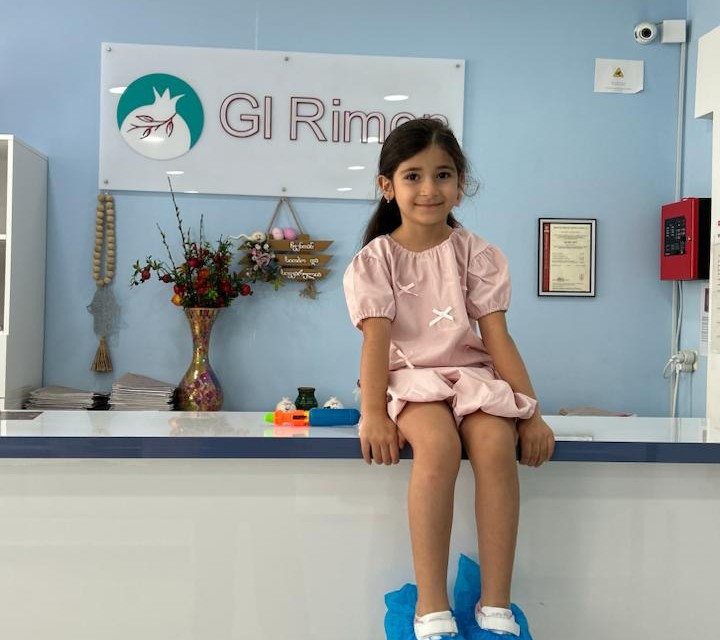
A girl born through the surrogacy program of GI Rimon clinic

A girl born through our surrogacy program.
At the clinic

Citizenship and exit documents for the baby

The Georgian birth certificate is the paper with which you apply to your country’s embassy or consulate for the child’s citizenship, passport or travel document; the procedure and the timeline depend on your country. For patients from Israel this means an application at the Israeli consulate, and we explain the steps and the documents at the consultation. After the birth registration and the consular formalities you leave Georgia with your child; the total time in the country after the birth is discussed with each couple in advance, and we recommend planning it before treatment starts.

Donor programmes

Egg donation and sperm donation law in Georgia

Egg donation and sperm donation are regulated by the same Article 143. Donation is anonymous: the donor has no parental rights and no obligations towards the child, is not mentioned in the child’s documents and does not receive information about the recipients; the recipients see the donor’s profile — physical data, blood type and test results — but not identifying details. A married woman who uses donor sperm needs the written consent of her husband. Our donors are screened at the clinic: egg donors are women aged 18–33 with confirmed health, and sperm donors undergo infectious, genetic and semen testing. How each option works is explained on the egg donation and sperm donation pages.

Worth knowing

Surrogacy for single parents and same-sex couples: the Armenia route

Because Georgian law limits surrogacy to heterosexual couples, single men, single women and same-sex couples who consider surrogacy go through our branch in Armenia, under Armenian legislation. The medical side — the embryo laboratory, the selection and monitoring of the surrogate — follows the same principles, and the legal side is handled locally by our representative in Armenia. The Armenian programs cost €62,000 to €78,000 depending on the source of the embryos.

The process

How the legal process works, step by step

  1. Eligibility check

    At the first consultation we review your family status and medical records and confirm that you qualify under Article 143.

  2. Paperwork

    You receive the list and prepare the apostilled and translated copies; we check them.

  3. Contract

    The agreement between the intended parents, the surrogate mother and the clinic is signed before any medical procedure begins.

  4. Medical stage

    IVF or the thawing of your embryos, embryo transfer, pregnancy monitoring — up to three transfers in the standard option, until the birth in the guaranteed one.

  5. Birth and registration

    The child is registered in your names within one day of the birth.

  6. Consular formalities

    You obtain the child’s travel document at your embassy and return home together.

FAQ

Frequently asked questions about surrogacy law in Georgia

Has Georgia banned surrogacy for foreigners?

No. A restriction was announced in 2023 but was never adopted by parliament, and as of September 2026 surrogacy for foreign intended parents remains legal under Article 143 of the Law on Health Care. We state the verification date on this page and update it if the law changes.

Can a single woman or a single man have a child through surrogacy in Georgia?

Not under Georgian law, which allows surrogacy only for heterosexual couples married or cohabiting for at least one year. For single parents and same-sex couples we arrange surrogacy in Armenia.

Whose names are on the birth certificate?

Only the intended parents’. The surrogate mother and the donors are not mentioned, the registration takes one day and does not require a court decision or the surrogate’s consent after the birth.

Is a surrogacy contract mandatory?

Yes. The written agreement between the intended parents, the surrogate mother and the clinic is signed before treatment starts; it is the basis for the birth registration. Our lawyer prepares it, and the legal support is included in the price.

Do I need my own lawyer in Georgia?

No. The contract and the registration are handled by our clinic. You are welcome to have the contract reviewed by a lawyer in your home country before signing.

Are the intended parents the legal parents if donor eggs or sperm were used?

Yes. Under Article 143 the couple for whom the pregnancy is carried are the legal parents regardless of the genetic link, and the donors have no rights.

How is the child’s citizenship arranged?

Through your country’s embassy or consulate, on the basis of the Georgian birth certificate. The procedure depends on your country; we explain the steps at the consultation.

The information on this page is general and does not replace personal legal or medical advice. The legislation of Georgia and Armenia may change; the information is correct as of September 2026, and the terms of each arrangement are fixed in the contract.

Check whether you qualify under Georgian law

Leave your details, and we will get back to you with a first answer and the list of documents you need.

Leave your details and we will get back to you
Want to check whether you qualify for surrogacy in Georgia and which documents you need? Leave your details, and we will get back to you with a first answer and the document list.